The Camino Starts with Yes
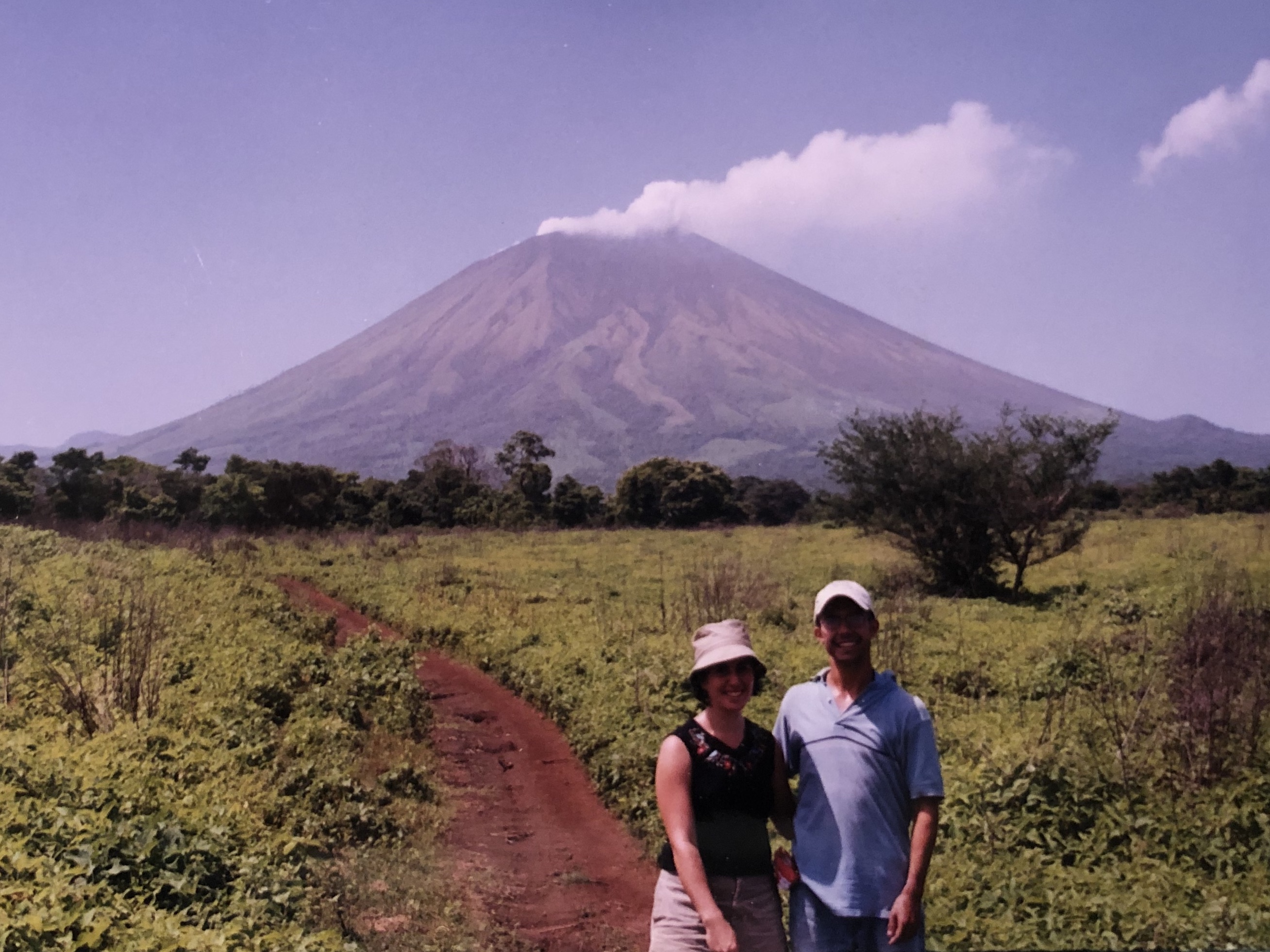
I first heard about the Camino de Santiago from my friend Julie in early 2005, shortly after she and I completed two years of service as Peace Corps volunteers in Nicaragua. Among our many mutual areas of interest, Julie and I shared alove of travel, often describing ourselves as vago or vaga, Spanish words describing someone always leaving home. We bonded over stories of our wanderings, both during and continuing after our time in Central America together.
I remember a conversation, more than 20 years, shortly after returning to the U.S., Julie described to me upcoming plans to join a friend in Spain to walk across the country to a church in Santiago. Although I continued to identify as vago, I also recall my mind losing interest at the time ass he explained the walk, the Camino de Santiago, is a traditional Christian pilgrimage with religious roots. Julie is a spiritual person who values her relationship with God and, though not Christian, she is the type of person to find deep meaning from walking the Camino. I too have always been spiritual and prayerful, but I had been going (and continue to go) through a complicated relationship with Catholicism and organized religion in general and was not quite in the mindset to learn more about the Camino at that time, so I filed it away, and the conversation moved on.
Ten years would go by before I heard mention of the Camino again. My partner Jason was describing to me a book he had just finished reading, “I’ll Push You,” a personal narrative about two close friends, one wheelchair-bound and one able-bodied, who committed to walk the Camino together. One, facing a degenerative condition that had already taken his ability to walk and control most of his physical movements, caught story about the Camino on television. He shared with his best friend it was something he’d like to pursue. Without hesitation, the friend committed to joining him and seeing it through together. I read the book and learned they had also produced a documentary which I watched shortly after. The deeply moving story taught me the Camino is more than visiting an old Church in Spain. It this case, it included overcoming physical adversity, perseverance, faith, and both testing and deepening friendship and relationships. This is something I wanted to experience. I did not imagine at the time it was something I could do while working, so I put the Camino in the category of experiences I’d like “to do one day,” which essentially meant after retirement, if ever.
Fast forward to the early 2020s when I met my friend Patrick. Coming out of the pandemic, my friends and I began spending more time outdoors, including hosting weekly volleyball pick-up games each Sunday in San Diego at Balboa Park. Over a year or two, the group grew to a few dozen regulars including Patrick, who joined shortly after moving to San Diego himself. Patrick and I bonded quickly. As a fellow Notre Dame grad, I knew we’d have a connection. Our conversations flowed easily from the start. Patrick and I shared a love of hiking and adventure, and I soon learned he had walked the Camino just a couple years prior. While Patrick’s story is not mine to tell, I will share he made the journey after grad school, accompanied by his brother, and through their walk, they grew closer, and Patrick gained clarity and confidence to make consequential life decisions.
I credit Patrick with my initial notion to consider walking the Camino sooner than later. He recognized my interest in the Camino and the value it could provide to my life and encouraged me to pursue it. He introduced me to the film “The Way,” which I had somehow missed when it originally came to theatres. I was inspired to learn more, leveraging the internet. I found the podcast “You on the Camino,” and said ‘yes.’ The remaining question was when.
In December 2023, I accepted a new job. I left a long-term position with the Federal Government and began a new roll with the City of San Diego. Without going into the specifics, one of my responsibilities, and the primary reason I was hired, included leading an approximately 18-month process to oversee a historic and controversial but critically important policy initiative for the City which, if successful, would result in the creation of a new fee estimated to result in the collection of around $120 million per year of new revenue to the City to cover the costs of services it used to provide without charging. I was scheduled to present the case for the new fee to City Council in June 2025.Knowing that consequential vote was coming up, I began to tell myself and close friends as early as February or March 2025 that if the project was successful, that if City Council voted in support to approve the fee, I would plan to request permission from my director for the time off of work to go to Santiago.
After a year of public outreach and engagement, robust study and analysis, June 9, 2025 came. My director and I delivered a 45-minutepresentation to City Council, which was followed by several hours of public comment and questions from Councilmembers. When the call for votes came at the end of the session, and I saw six come up on the screen, the minimum we needed, my body softened, and I released a weight I had been holding since I had been hired.
My director and I left the dais and made our way slowly to her office, on another floor in the building, exchanging congratulations with each other and our colleagues on the way. It was early evening already, and we had a happy hour to attend, but I asked her if she had a moment first.
I closed the door and started, “I’ve been thinking about going on this pilgrimage. Are you familiar with the Camino de Santiago? It’s along walk across Spain. People have been doing it for a thousand years. It’s something I’ve wanted to do for a while. I would probably need to take about six weeks off. I’m thinking about maybe next fall.”
The change in her face from when I first closed the door to when I finished my opening gave me my answer.
“Yes! I’m here for it! I thought you were going to say something else!”
Pleased that I was not giving my two-weeks’ notice, and that I was asking to walk the Camino in early September 2026, nearly 15 months after our conversation, my director was happy to support my request. We both agreed in the value of normalizing sabbaticals and taking time off in general.
This was the first moment it felt real and, although I wouldn’t be walking for more than a year, I felt my Camino had begun.
A note from you
Did something here resonate?
I’d love to hear from you.