Why the Scallop Shell?
On the Camino de Santiago, the scallop shell is ubiquitous. It has become the official symbol for the Camino and can be seen throughout visual media, on signage across Spain directing pilgrims on their way, and even hanging from many if not most pilgrims themselves walking to or from Santiago.
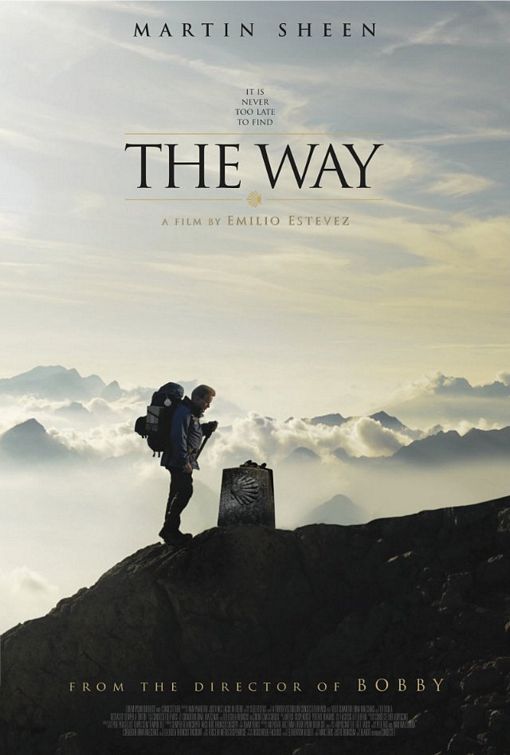
The shell is clearly visible on the poster for “The Way” and in other Camino-related visual media. It shows up throughout Camino travel books. It appears multiple times towards the top of Google search results. There’s an established association between the shell and the Camino, and I was interested to learn why.
I wanted to understand more about the origin and symbolism of the iconic scallop shell before traveling to Spain next month. I quickly learned the relationship between the Camino de Santiago and the scallop shell is not a recent trend. In fact, the earliest evidence I found goes back to the 12th century, around the time visits to the legendary tomb of St. James started to take off across Europe.
One important written source from this period is the Liber Sancti Jacobi, also known as the Codex Calixtinus, a five-book compilation about Saint James and the route to Santiago, compiled between about 1138 and 1145. The work describes the Camino and includes prayers, pilgrimage travel guidance, and stories of miracles associated with Saint James and pilgrim “souvenirs” from Santiago. For example, in one account, said to have occurred in 1106, a knight suffering from a severe throat ailment was cured after appealing to St. James and being touched with a scallop shell that a neighbor had brought back from a pilgrimage to Santiago. According to the account, the knight was healed and subsequently inspired to make his own pilgrimage to the tomb of St. James.
Physical evidence backs up the written stories that associate scallops with pilgrims and Santiago. I found many examples of archaeological discoveries throughout Europe with burials dated from the mid-11th through early 13th centuries, including sites in France, England, within the Cathedral of Santiago itself, and Jerusalem. The Jerusalem finds are particularly interesting, suggesting possible serial pilgrims who had visited Santiago and later traveled to the Holy Land. Many of the articles noted the shells were pierced with artificial holes, suggesting they were attached to clothing.
This tracks with the artistic imagery I found portraying pilgrims with scallop shells attached to hats, clothing, and especially bags.
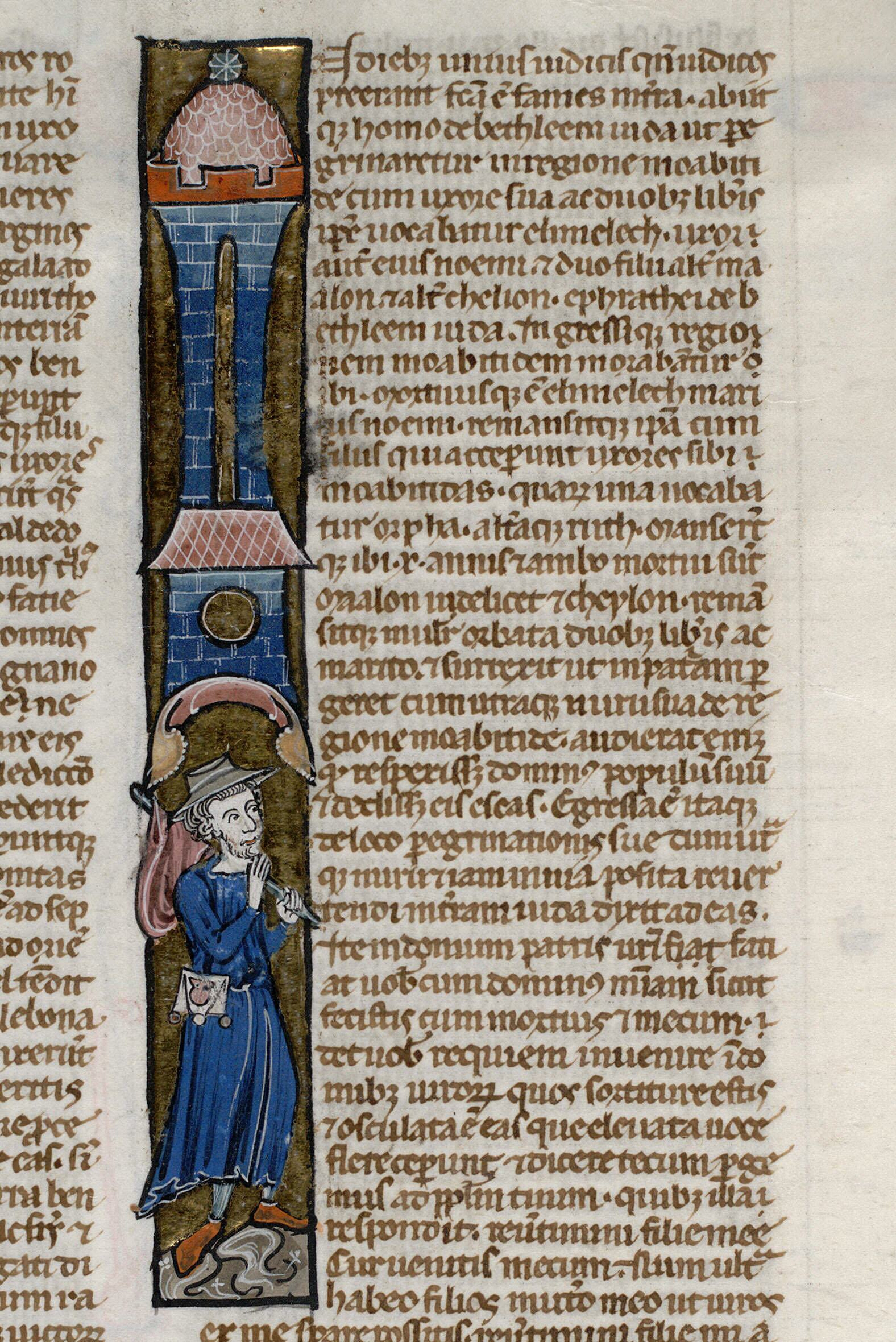
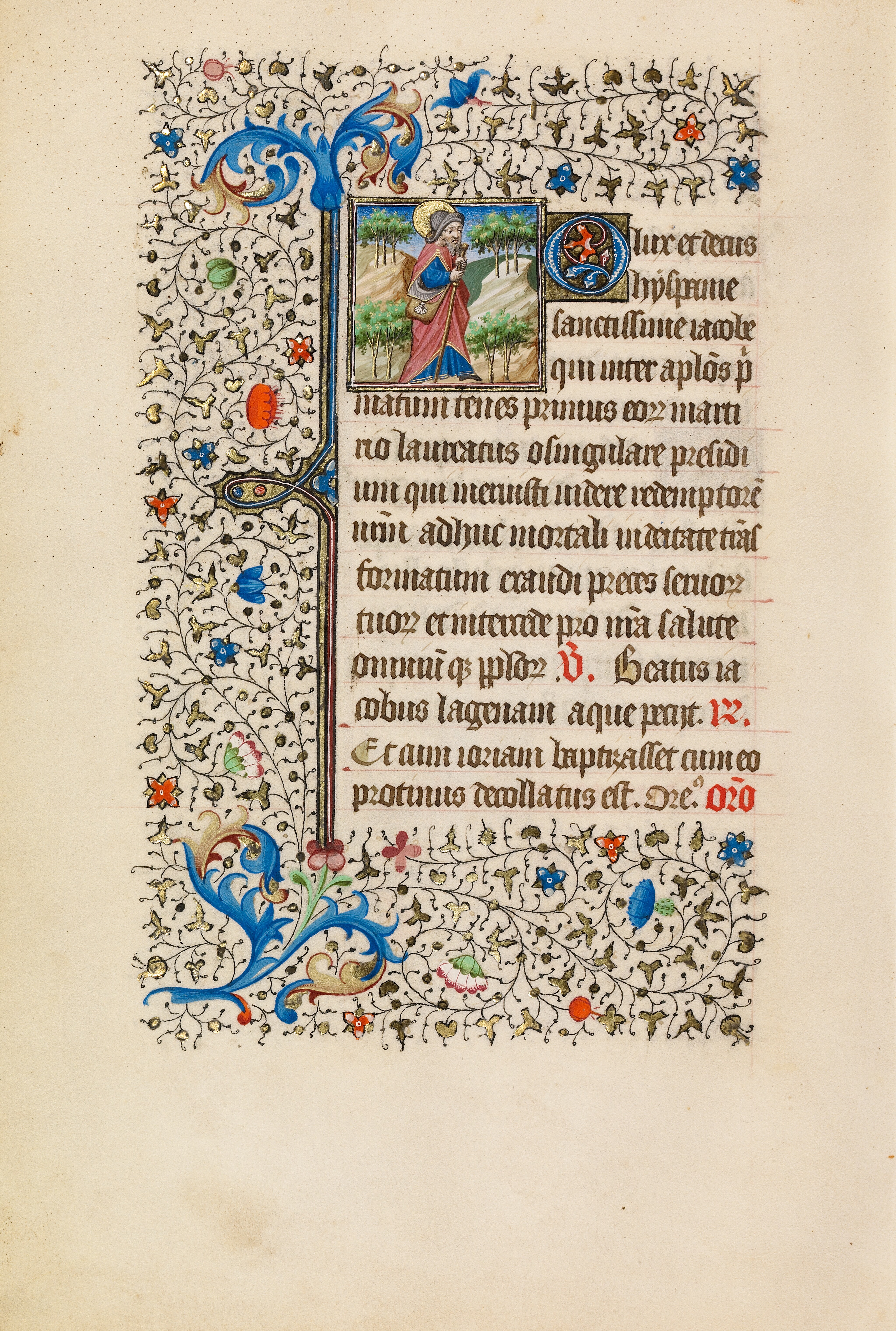
The orientation of the shells is notable in both examples above and the others I found. The umbo, or point of convergence, is at the top.
The first Camino-associated shell image I recall seeing was that of the yellow signs now posted throughout the Camino directing pilgrims to Santiago. Learning about the medieval origins of the shell and the typical point-facing-up orientation, I wondered “When did the shell turn sideways?”
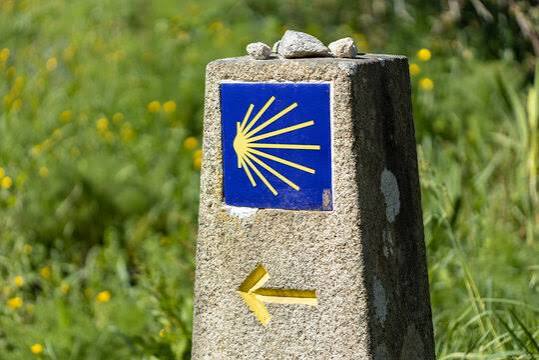
I love the metaphor of the shell and its radiating ribs representing multiple roads or routes converging on Santiago. I was surprised to find no evidence medieval pilgrims recognized this symbolism. Rather, the shell as “all roads lead to Santiago” originated relatively recently in the 1980s and apparently by accident.
In 1987, the Council of Europe chose the Santiago de Compostela Pilgrim Routes as its first European Cultural Route. In addition to promoting democracy, human rights and the rule of law across Europe, this international organization also takes responsibility to “promote…culture and Europe’s cultural and natural heritage.” In 1986, the Council sponsored a contest to find a logo for the Camino.
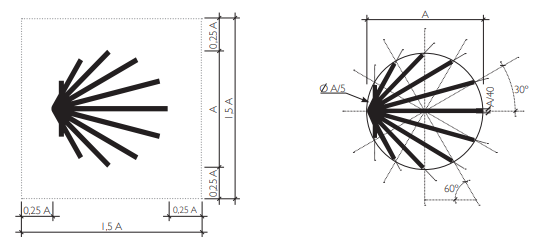
Two Galician designers, Pedro García-Ramos and Ignacio Macua, learned of the contest with only 6 days until the deadline. García-Ramos explained later in an interview that they almost missed it because they learned about it so late. He further recounted their inspiration. They began with twelve yellow stars against a blue backdrop, drawing on the same medieval twelve-star imagery associated with the European flag. García-Ramos then drew lines from the outer points toward a single point in the west. By coincidence, he recognized that the resulting image resembled a scallop shell and adjusted the lines and convergence to emphasize the likeness. The Council selected the design by García-Ramos and Macua, and the rest is history.
While fascinating, the history I learned to this point didn’t definitively answer the original question of why the shell became the symbol of the Camino in the first place. I have my suspicions, but without original sources, they remain conjecture.
Pilgrims who visited sacred sites often sought an object to carry home with them, both for protection on the return journey and as a blessing for their home community. These pilgrim souvenirs were often small objects made of lead or other metals.
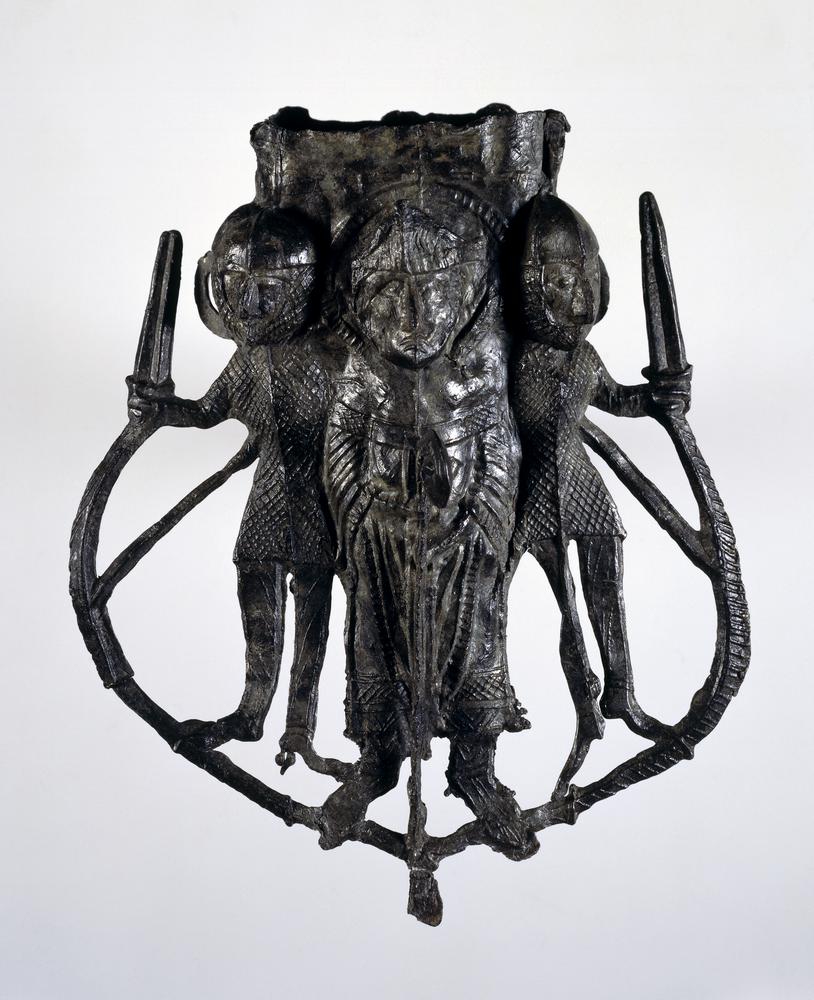
It’s plausible that the scallop shell became Santiago’s devotional object because of the pilgrimage’s proximity to the Atlantic coast, which provided a relatively nearby source of a natural object that could serve the same purpose as an artificial badge. Notably, pilgrims visiting the site of Mont-Saint-Michel, where legend told the Archangel Michael had appeared, also seem, for a time, to have returned home with shells as pilgrim badges. Mont-Saint-Michel sits right at the coast, with shells readily available, as with Santiago. What wasn’t clear was why or when the connection between the scallop shell and Mont-Saint-Michel receded while Santiago’s became so strong. By the later Middle Ages, pilgrims to Mont-Saint-Michel were also carrying lead-alloy pilgrim badges. It’s possible the strengthening connection between the scallop shell and Santiago helped distinguish the symbol there from other pilgrimages, but I found no evidence proving that.
Some have also suggested a connection to the shell’s much older symbolism of birth and rebirth, dating to antiquity and famously associated with Venus. While I found no historical evidence supporting a connection to the Camino, I do find the symbolism personally meaningful for my own journey.
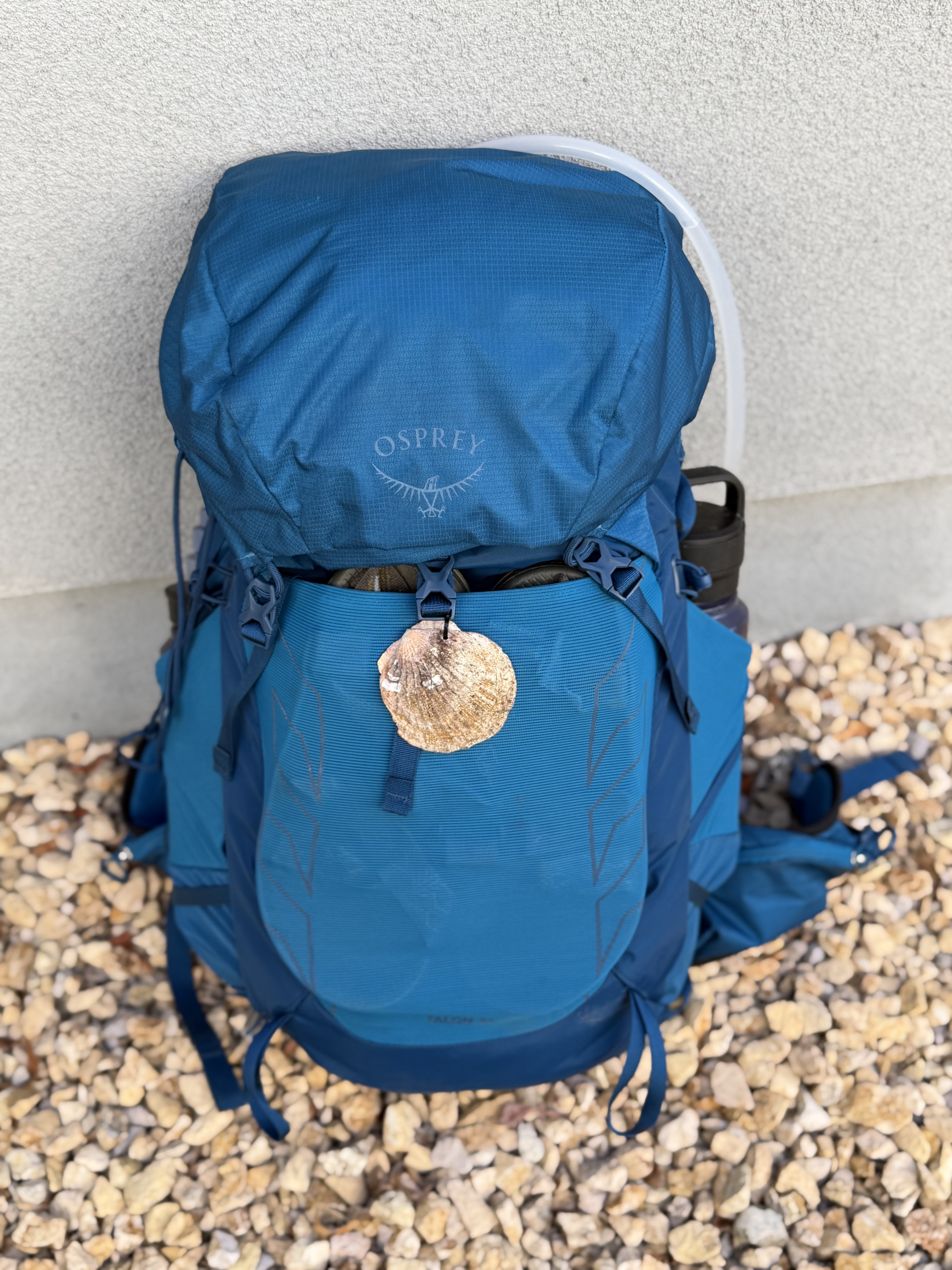
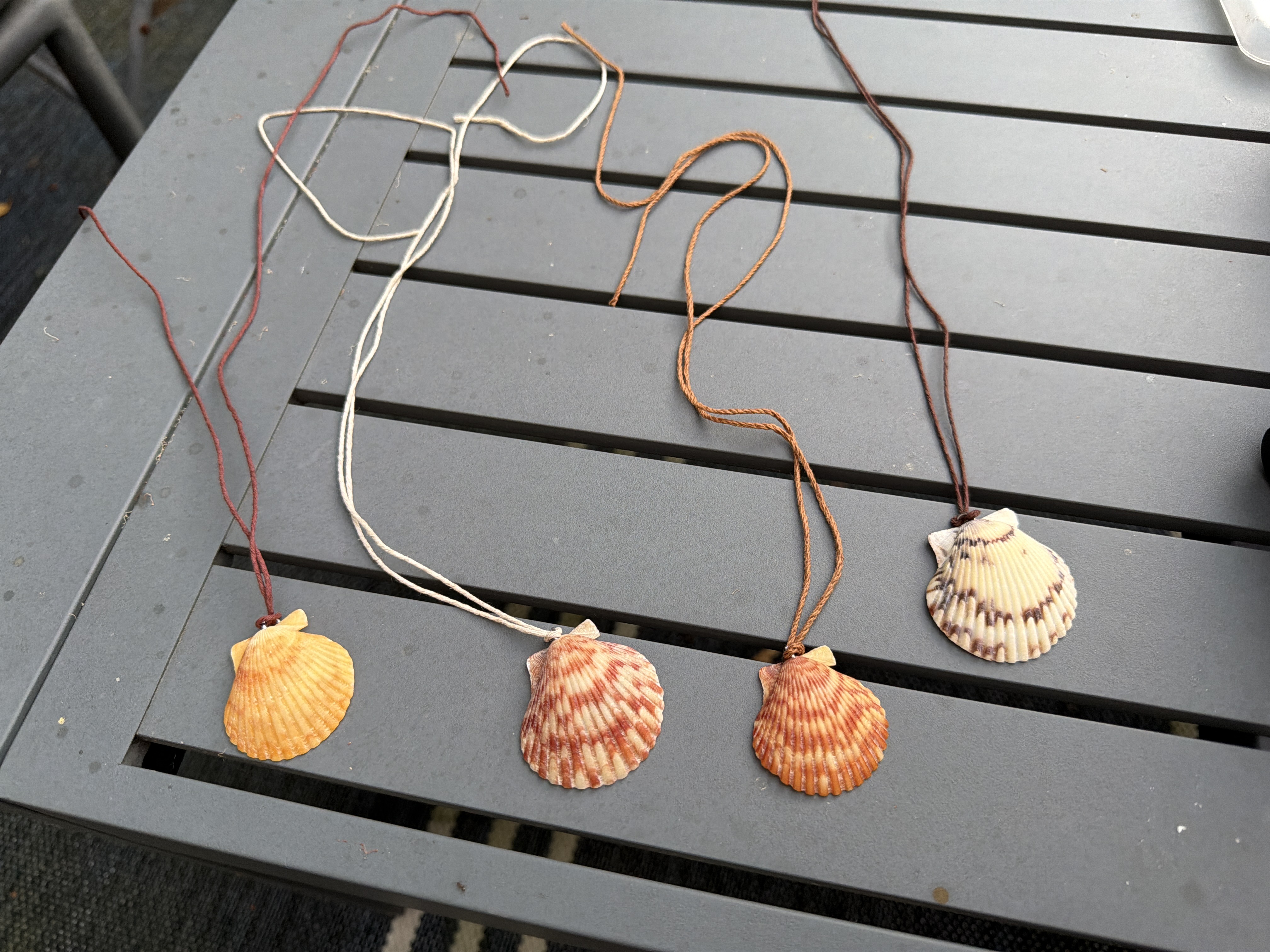
On a recent beach walk with my friend Rachel here in San Diego, while talking about the Camino and what I hope to achieve on that journey, we found ourselves gathering sand dollars and scallop shells and came up with an idea. I had mentioned to her that one of the experiences I look forward to most is making connections with like-minded people from all over the world who are walking the Camino in search of spiritual and personal growth. Rachel and I came up with a plan to make a handful of simple shell charms. I’d carry them in my pack and have them with me as I meet people along the way. I took the idea and ran with it. If I find myself spiritually moved and particularly connected with a fellow pilgrim, I’ll hand one over as a keepsake and blessing to carry with them on the rest of their journey. Buen camino.
A note from you
Did something here resonate?
I’d love to hear from you.