What We Carry, What We Leave Behind, What We Bring Home
I finally weighed my pack. Honestly, it wasn’t as bad as I thought it would be. Total, with full water bottles, I’ll be carrying 22 pounds on my back. That includes a couple t-shirts, an outdoorsy button down, extra shorts, a few pairs of socks and underwear, hiking pants, Chacos, flip flops, a silk sleep sack, an ultralight blanket, blow-up pillow, sleep mask, ear plugs, headlamp, toiletries, charge cords, a poncho, a scallop shell, a Kindle, and, for capturing my experience, a tripod, HOVERAir, and a journal. For most of the trip, I’ll also have with me a small stone, some scallop charms, and a memorial keepsake.
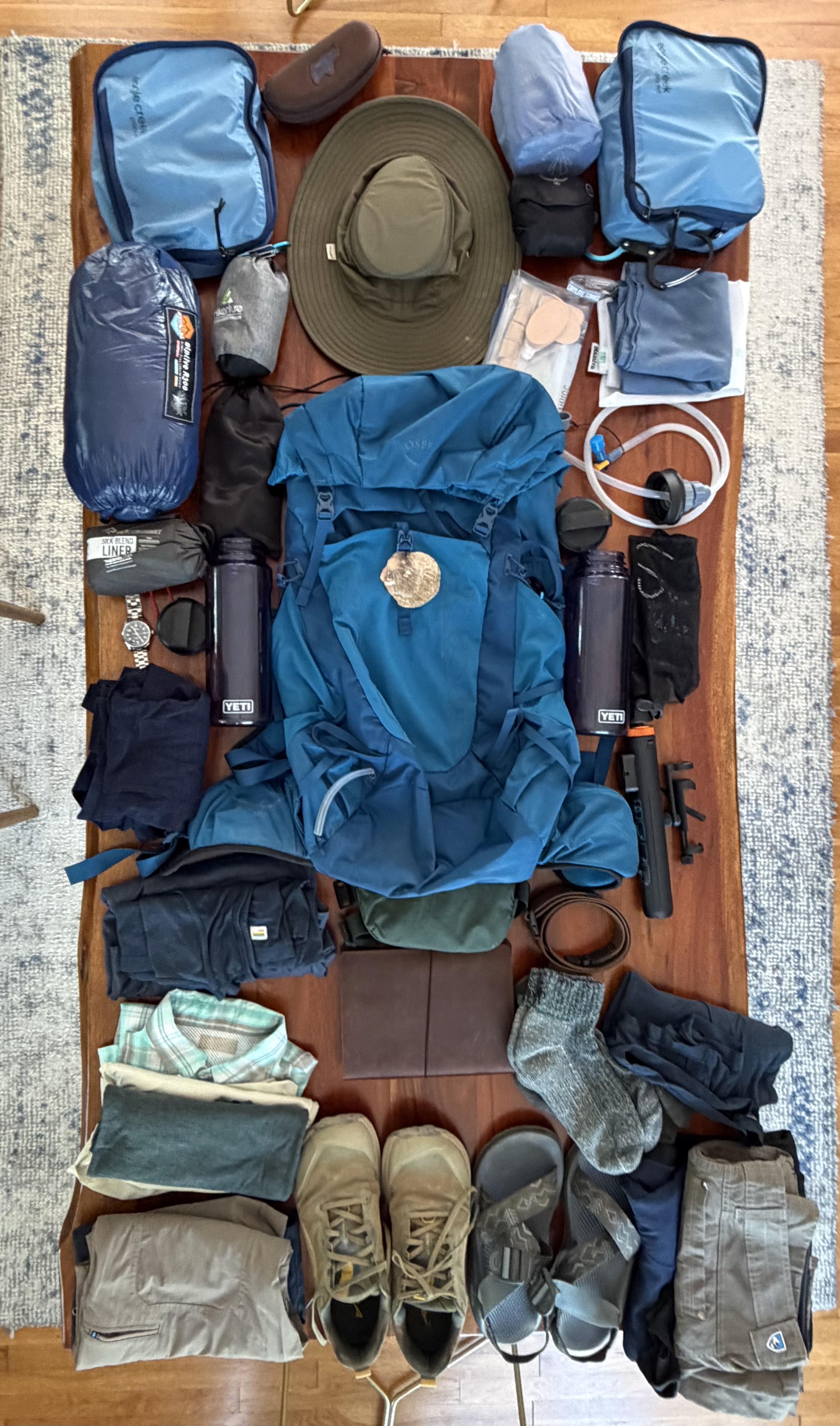
My total exceeds the general Camino rule of thumb of 10 percent of body weight, but I can always leave things behind along the way if it gets to be too much. Also, I’ve been managing OK on my training hikes here in San Diego.
Beyond the physical items, I bring my intentions, to walk with an open heart and a growth mindset and, although I begin the journey alone, I bring my hope to connect with fellow travelers along the way.
Of course I’ll also carry with me residual stress, at least at the beginning. While I do anticipate that stress to dissolve away as I disconnect from work, normal life responsibilities, social media, and politics, I also know from experience that will take at least a few days or so to reach its full effect. However, just thinking about being in that state of mind seems to lower my blood pressure and release tension throughout my body already.
Although I’ve never taken six weeks off work before, it’s not uncommon for me to leave home for a two-week-long vacation once every year or so. In those instances, it’s often not until the second week that I feel completely mentally disconnected from work, allowing my mind to fully rest and be present for the trip. I suspect the act of walking the Camino will likely accelerate this process, given the physical intensity, especially in the beginning as my body acclimates. I’ll be walking an average of more than 15 miles per day, including significant elevation gain at the start with a climb over the Pyrenees. Hopefully the weather cooperates. The forecasts have been predicting a range of temperatures and inconsistent chances of precipitation, depending on which website I consult. Regardless, I’ll need to keep moving forward carrying everything with me the entire way. Importantly, that includes a poncho.
From what I’ve learned about the Camino Frances, pilgrims often describe the journey as three components including the physical, the mental, and the spiritual.
With the passing days, pilgrims become accustomed to the physical. Their muscles are conditioned. They get into a rhythm.
The second third is often referred to as the mental phase. You’ve gotten used to walking with your pack. Now you can really focus on your thoughts and reflections. This includes walking the Meseta, a large central plateau covering much of Spain’s interior. This can be where emotions sometimes take over, as your reflections take over and your mind releases thoughts you didn’t know you had.
At around the two-thirds mark, we reach the Cruz de Ferro, or Iron Cross, where a simple iron cross stands atop a tall wooden pole. Travelers have added stones to this spot for centuries, possibly continuing older roadside rituals dating back to the 5th century or perhaps augmenting an existing cairn that served as a landmark. More recently, since at least the 90s, pilgrims have been leaving a stone or other item brought from home to release a burden or acknowledge an intention.
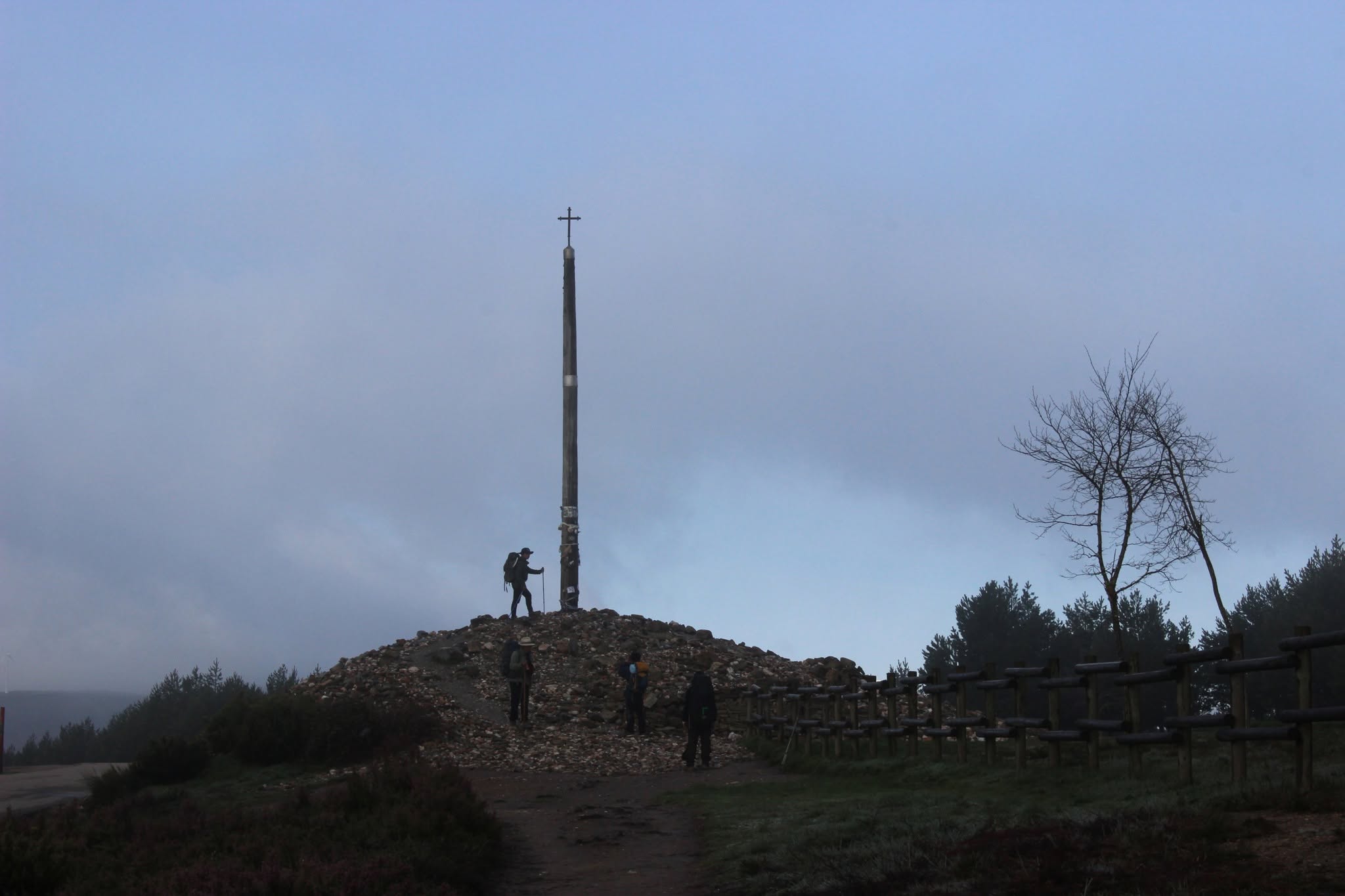
Among these, for my part, I’ll have a piece of pyrite with me I’m bringing from home, a symbolic nod or aspiration to leave behind false treasures and devote more time and energy to what really matters. I also plan to reflect on a lost friend at this site and along the entire way.
I’ll convey prayers or intentions friends have shared with me. If you happen to read this and would like me to carry your intention or prayer with me, let me know. I anticipate I’ll be at the Cruz de Ferro around September 28 or 29.
For many, the Cruz de Ferro also marks the transition from the mental phase of the Camino to the spiritual. I’ll continue that final third of the walk until I arrive at the Plaza in Santiago where my partner will await me. I anticipate this will be emotional.
After a day of rest, we walk 3 more days to Fisterra, the “End of the Earth,” where I hope to find a Galician scallop shell at the beach, potentially replacing the small shell charms I brought from San Diego and may have distributed by this point to those who made an impact on me.
While I can choose and identify what I bring, I can’t really inventory what I’ll carry back, at least not spiritually or emotionally. I can’t know whether or how I’ll be changed mentally or spiritually. The Camino isn’t a recipe. Pre-heat in the Pyrenees. Bake for a couple weeks through the Meseta. Cool down for a week in Galicia. Done. Enjoy your new life. No. I realize it’s not like that.
I don’t presuppose anything from the Camino, but I do plan to carry my intentions with me. I hope they guide me along the way and, for the ones that matter most, come home with me too.
I’m hopeful for human connection, maybe new friends from across the globe, maybe some clarity, maybe something I don’t know to expect yet. I’m also hoping that, in bringing my intentions with me and leaving behind a few false treasures along the way, I return with a little more of what matters. I’ll also welcome any long-term physical and mental health benefits that can follow a sabbatical.
Some intentions I may leave behind. Others I expect to carry with me throughout, and on my return. As some say, the Camino really starts on the journey home.
A note from you
Did something here resonate?
I’d love to hear from you.